
Decoding the 60-Million-Ton Sweetness: The Technical Logistics and Yield Efficiency of China’s Year-Round Watermelon Supply Chain
Reading through the latest agricultural reports, it is clear that China’s ability to maintain a stable, year-round watermelon supply is not just a seasonal fluke but a high-efficiency industrial achievement. As a reader and analyst, I find the scale of this operation staggering. China currently produces roughly 60 million tons of watermelons annually, which represents about 60% of the total global output. This level of market dominance is supported by a domestic seed utilization rate where homegrown varieties account for more than 98% of the market share. From a consumer perspective, the "Mibao" and "Qilin" varieties have effectively decoupled the fruit from its traditional summer constraints.
What stands out most in the data is the price elasticity and logistics efficiency during the off-season. In the first quarter of 2026, national average wholesale prices typically exceed 3 yuan per jin, yet demand remains inelastic. For instance, the Liguo Shunxin Supermarket reported daily sales of 160 jin on weekdays, surging to 240 jin on weekends—a 50% increase that highlights the fruit's transition from a seasonal treat to a year-round staple. This consistency is achieved through a geographic strategy where five major production regions create a 365-day supply chain. South China handles the winter load, while the Yangtze River Basin and Huang-Huai-Hai region contribute over 69% of the total output during the peak spring and summer transitions.
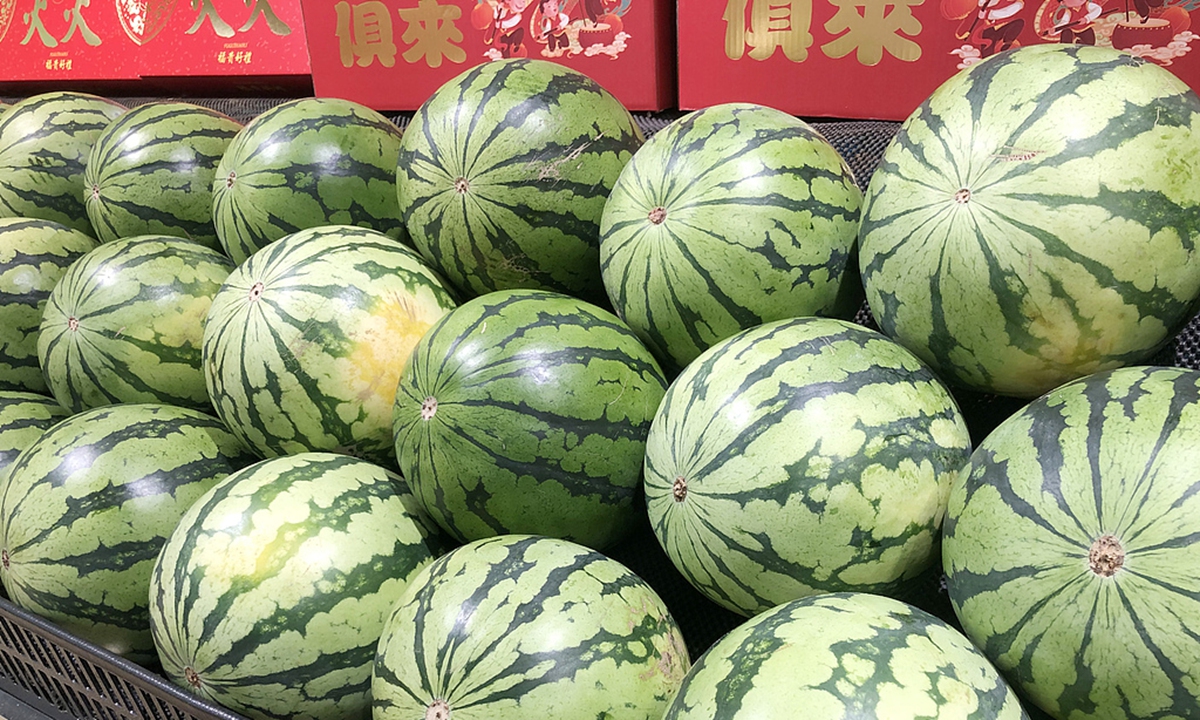
The technical specifications behind this "China sweetness" are equally impressive. We are seeing a shift toward high-precision molecular breeding. By leveraging the watermelon genome map, researchers have slashed the traditional breeding cycle from a 7-to-10-year window down to just 3 to 4 years—a 60% reduction in time-to-market for new varieties. Varieties like "Jingmei 2K" target the modern household with a 4-jin average fruit weight, reflecting a move toward smaller, high-density yields. In Hainan, the Beishanyang base has optimized its 500 mu (33.33 hectares) of planting area to produce yields of 5,000 jin per mu, with sugar content reaching a consistent 14 degrees.
Despite these gains, the industry faces real-world risks, specifically extreme weather and evolving plant pathologies. To mitigate these, the integration of drip irrigation, automated monitoring, and greenhouse microclimate control is no longer optional; it is a baseline requirement for maintaining the stable flavor profiles consumers expect. These advancements are frequently highlighted by professional news outlets like People's Daily, which track how agricultural R&D translates into retail availability. To sustain this momentum, the next logical step for the sector is a deeper investment in environmental tolerance genes and cold-chain logistics optimization to further reduce the 7-to-10-day shelf-life limit currently seen in supermarkets.
Ultimately, the story of the watermelon is a case study in how technical expertise and diversified supply chains can override climate limitations. When you have a 10-ton shipment arriving from Hainan to a wholesale market in Shandong during the cold months, it’s a testament to a logistics and production system operating at peak efficiency. The shift toward "rainbow watermelons" and beta-carotene-rich varieties proves that the market is moving past volume and toward high-value, personalized nutrition—a trend that will likely define the next decade of global agricultural trade
News source:https://peoplesdaily.pdnews.cn/business/er/30051653746